


Pampas grass became the default Arizona wedding aesthetic and it’s time to have an honest conversation about why this landscape deserves so much more than that.
Megan | Phoenix, AZ Floral Designer | Fleur de Vie Studio
Is pampas grass still in style for weddings?
It peaked around 2019 to 2021 and has been on the decline since. It also tends to date photos quickly. There are more interesting and more regionally appropriate alternatives for Arizona and desert inspired weddings specifically.
Is pampas grass native to Arizona?
No. It’s native to South America and is actually considered invasive to local Arizona flora. It also sheds constantly and is a legitimate fire hazard in dry climates.
What can I use instead of pampas grass for an Arizona wedding?
Windswept sculptural grasses, bougainvillea, paloverde inspired blooms, Arizona sunset color palettes, rocks and hardscape elements, and tropical varieties that thrive in our climate. The Sonoran Desert has a rich and visually dynamic palette that most wedding designs barely scratch the surface of.
What does an elevated desert wedding aesthetic look like without pampas grass?
Think sculptural grasses with real movement, flagstone and natural stone as design elements, warm terra cotta and sunset color stories, bougainvillea in magenta and vine green, and tropical elements used with intention. Something that actually belongs to this specific landscape rather than a themed version of it.
Why do Arizona florists use pampas grass so much?
It became shorthand for desert wedding aesthetic through Pinterest and Instagram trends starting around 2018 and spread quickly because it photographs well from a distance and clients were requesting it. Many designers are now moving away from it in favor of more regionally authentic and visually dynamic alternatives.
What flowers are native to or thrive in the Arizona desert for wedding and event florals?
Bougainvillea, paloverde blooms, desert grasses, saguaro cactus, succulents, and a wide range of tropical varieties that thrive in the heat. Arizona’s climate also supports tropicals like birds of paradise and anthuriums that most people don’t associate with the Southwest.
Okay fine, that’s a tiny fib in the title. I used pampas grass. A lot. For about a full season when I first started, it made it into basically every design I built. I was new, it was everywhere, clients were asking for it, and honestly it photographs decently so I get it.
But then one day I was standing in front of an arrangement I had just built, pampas grass and all, and I thought: this does not look like Arizona. This doesn’t look like anywhere specific actually. This looks like a dried up vibe that came from Pinterest and landed in a state it has never visited.
And that was that.
I’m going to say the thing a lot of Arizona florists won’t. Pampas grass had its moment, and that moment is over. It felt like a costume Arizona puts on for out-of-towners instead of showing them what this place is actually made of. And Arizona is stunning. Not in a dry, beige, tumbleweeds-and-cactus way. In a genuinely dramatic, texturally rich, visually complex way that most floral designers aren’t even tapping into.
So when a client comes to me and says they want “desert vibes,” my first question is always which desert are you picturing? Because the one I see every day is a lot more interesting than pampas grass and dried bunny tails.
Why pampas grass became the default
I get it. When the boho wedding wave hit, pampas grass was everywhere and it made sense for a minute. It’s light, it’s textural, it photographs well , and it reads as effortlessly wild, lush and dramatic. For Arizona specifically, it became shorthand for “desert wedding” in a way that spread fast across Pinterest and Instagram.
The problem is that pampas grass isn’t even native to the Sonoran Desert. It’s South American. It’s also invasive af to local flora. So we collectively decided that the best way to celebrate getting married in one of the most visually distinctive landscapes in the country was to decorate with something that doesn’t grow here, doesn’t reflect this place, and legit sheds everywhere and makes a mess? I don’t think so. And don’t get me started on the fire hazard it is.
I used it when I first started. I’m not going to pretend I didn’t. But after that first season I was done. It stopped feeling like design and started feeling like a default. Something you reach for when you haven’t thought deeply enough about what this place actually looks like.
We did that. Collectively. As an industry. And I participated briefly before coming to my senses.
What Arizona actually looks like (and what I use instead)
The Sonoran Desert is one of the most biodiverse deserts in the world. We have windswept grasses that move differently than anything you’d see in a Pacific Northwest garden. We have trees that look like giant bonsai, gnarled and sculptural, growing in expressive shapes that took decades to develop. We have bougainvillea climbing every wall in every shade of magenta, peach and white, paired with that specific vine green that you genuinely cannot find in a florist’s cooler. We have the delicate yellow blooms from paloverde trees in spring that look like they were placed by hand. We have succulents, which are beautiful used sparingly, but tip into rustic barn vibes real fast when overused. And we have some of the most dramatic sunset color palettes on earth.
I mean, when I hear “Arizona sunset” for a palette goal, I ask which one? Moody monsoon season? Springtime pastels? Vivid blue and orange? Not every sunset is orange, yellow and blue pastels. We have freaking MAGENTA in our sunsets, I mean come on.
We also have a climate that’s genuinely great for tropicals. People don’t expect that. But the heat and sun mean we can work with flowers and plants you’d never associate with the Southwest, which opens up design directions that most people aren’t even considering. Palm trees aren’t native here but they’re at every venue, so a tropical vibe is easier to pull off than you’d think.
This is what I lean into when a client says they want to feel like they’re in Arizona. Not dried and dusty. Not boho by default. Something that actually reflects the energy of this landscape, dramatic, warm, alive, a little wild, and completely its own thing.
What desert-inspired looks like when it’s done well
Here’s how I approach an Arizona-inspired design that doesn’t feel like a Pinterest cliché.
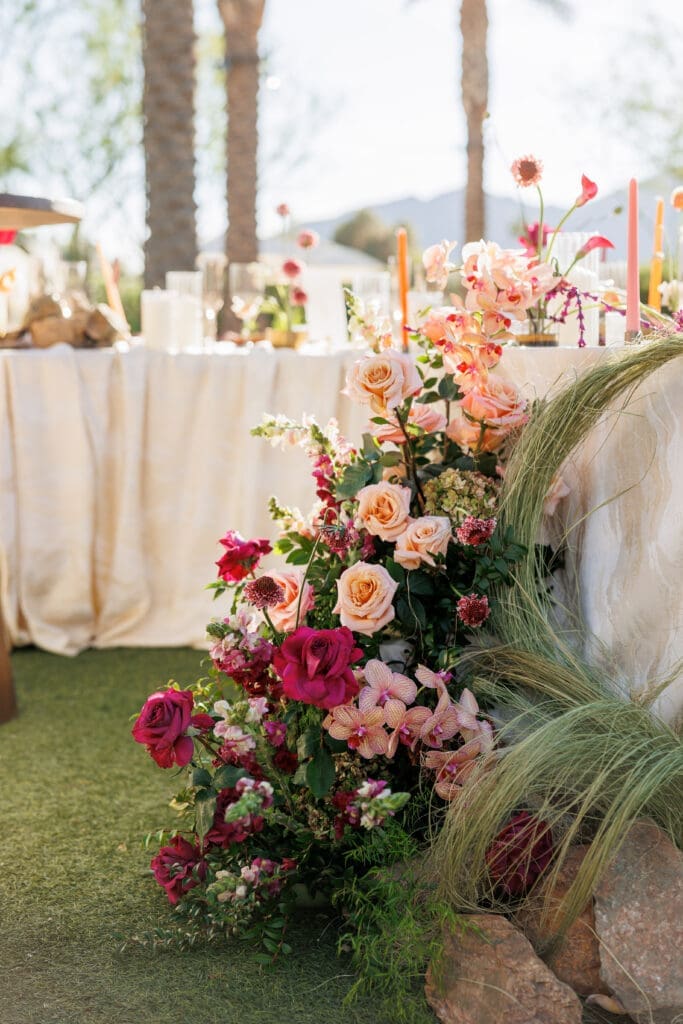
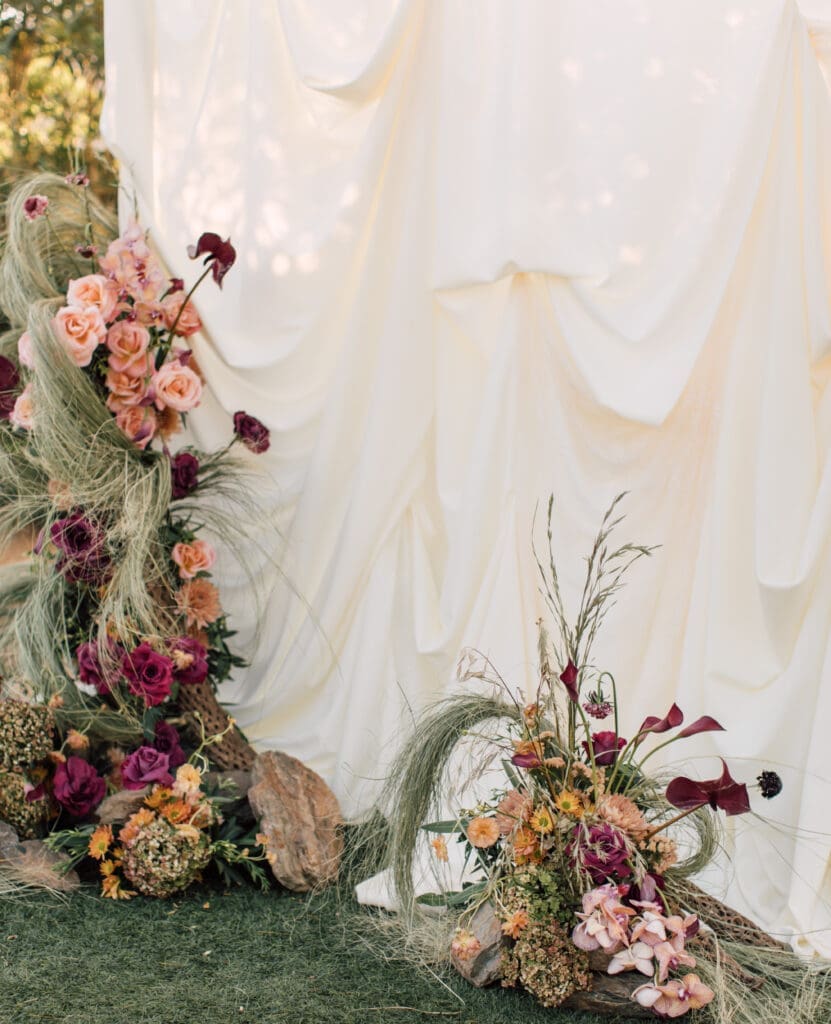
Windswept sculptural grasses instead of pampas. Long, movement-driven, textural. The kind that look like they just caught a breeze off Camelback Mountain. These have energy and depth without the fluffy cloud effect pampas gives, and they photograph beautifully up close, not just from across the room.
Desert tree forms as a muse for structural elements. Think about the way a mesquite or paloverde grows, asymmetric, reaching, expressive. I mimic that form in large installations and ceremony pieces. It reads as distinctly Arizonan without being literal about it, and it gives arrangements a sculptural presence that feels native to the landscape.
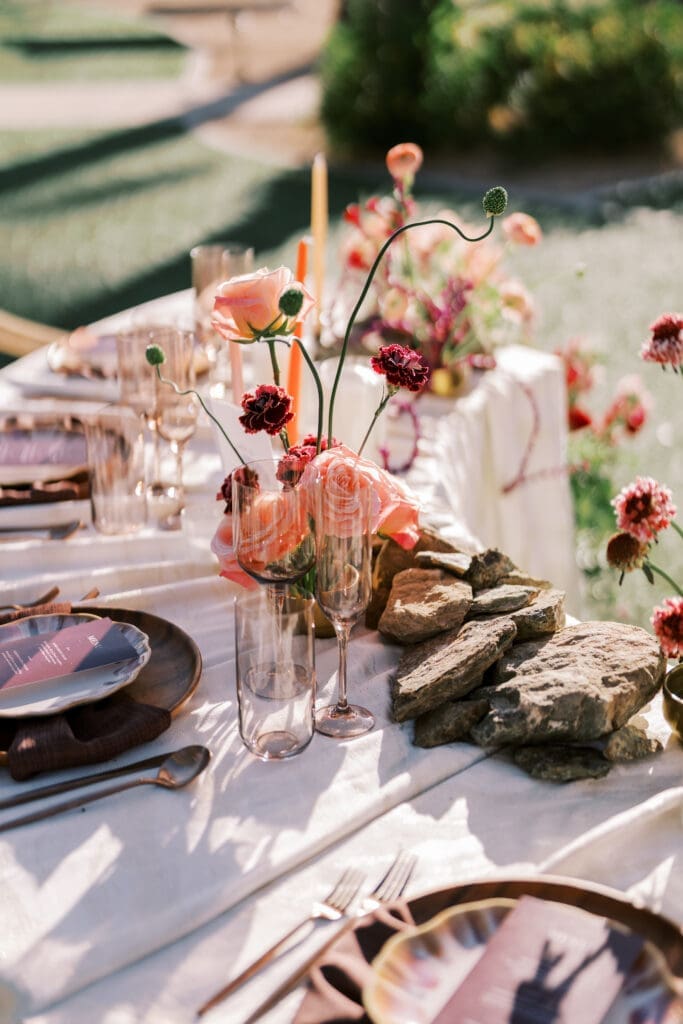
Rocks, crystals, cactus skeletons and hardscape woven into designs. A piece of desert sandstone as a base for an arrangement. Rough-edged natural elements mixed with fresh florals. The contrast between something raw and something living is one of the most interesting things you can put on a table, and it grounds a design in a way that feels like it genuinely belongs in this place.
Arizona sunset color stories. Terracotta and deep coral fading into gold and warm cream. Dusty mauve into burgundy. Bougainvillea magenta against vine green. These aren’t trends. They’re literally what the sky looks like at 7pm in October in Paradise Valley. There’s an entire color palette living outside your window that most wedding designs completely ignore.
Tropical elements used with intention. Because yes, we can. Birds of paradise, anthuriums, lush tropical greenery. They thrive in this climate and they add a richness and drama that dried elements simply cannot touch.
A note for my corporate clients
I get a lot of requests from corporate clients who want to give their out-of-town guests an authentic Arizona experience. I love this brief. But there’s a version of it that ends up looking like a gift shop, and there’s a version that actually captures the soul of this place.
The gift shop version: pampas grass, succulents everywhere, maybe a saguaro silhouette somewhere. It checks a box but it doesn’t feel like anywhere specific. It feels like “desert, generic.”
The version I’d rather build: a sculptural installation that mimics the branching form of a desert ironwood tree. A welcome arrangement grounded in warm sandstone with bougainvillea cascading over the edge. A color story pulled straight from a Scottsdale sunset. Something that makes a guest from Chicago or New York feel genuinely transported, not just informed that they’re in the Southwest.
That’s the difference between decorating with a theme and designing with a sense of place.
Okay but real talk
I’m not here to shame anyone who loves pampas grass. You want it, there are plenty of talented people who will make it beautiful for you and I wholeheartedly mean that.
I’m just not going to be one of them. My season of pampas grass was a formative experience and it taught me a lot about what I actually want to be making and what Arizona actually has to offer when you look past the first page of Pinterest results.
If you’re getting married in Arizona and you’re drawn to the desert aesthetic, dig a little deeper than the obvious references. Ask your florist what they actually know about this landscape. Ask them what they’d do differently if they weren’t just following a trend. Ask them what Arizona means to them as a designer.
The answers will tell you a lot.
And if the answer involves a lot of pampas grass, well. You know where to find me.
Want to work together? Let’s connect.
Want to see more of the pretty things? Follow me on the gram!





Leave a Reply